
Telling Mumbai’s engineers which pipes will leak next, so water is saved before it’s lost.
Water wAIS is an AI leak-risk system built on Brihanmumbai Municipal Corporation (BMC) records, tested in the field with BMC engineers.
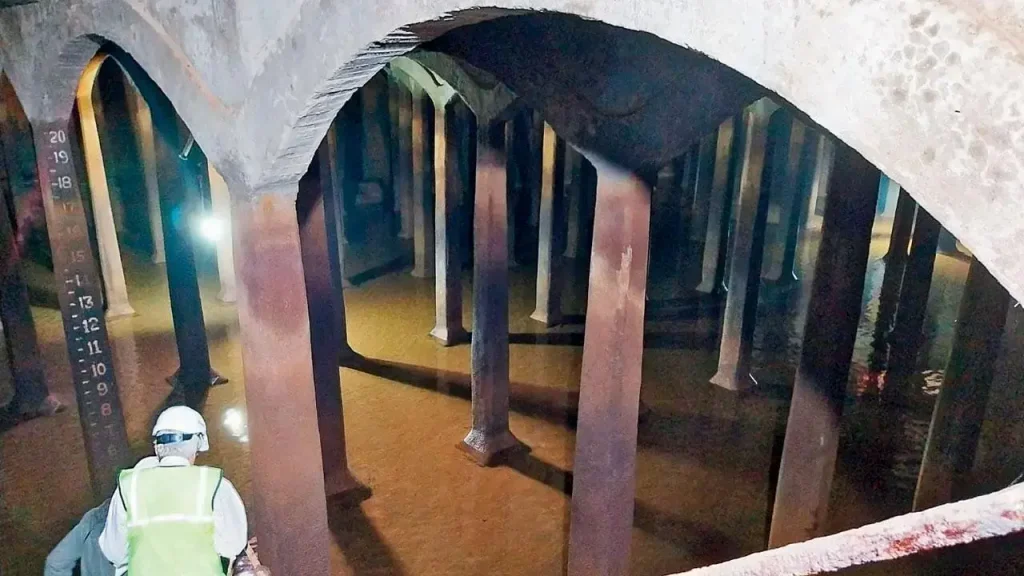
Mumbai isn’t only short of water. It’s losing it underground.
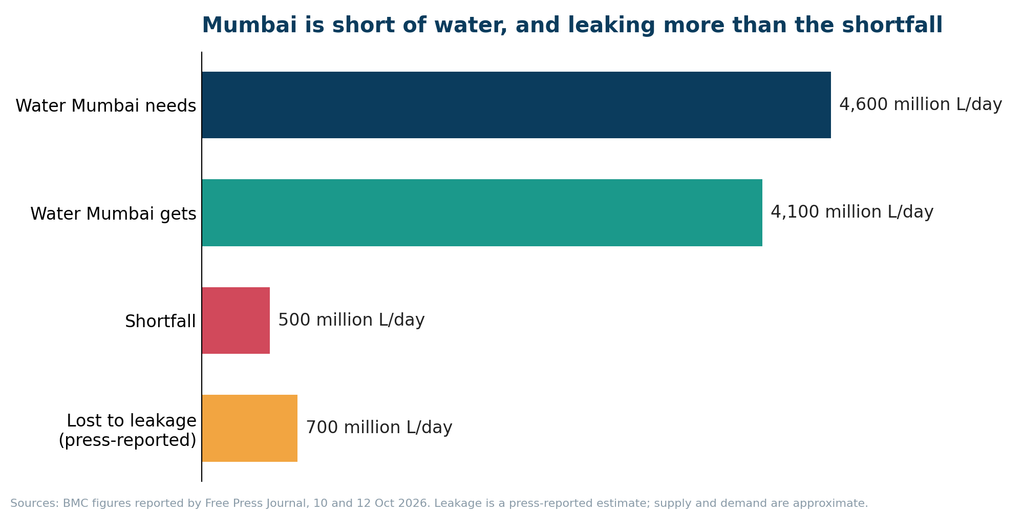
Mumbai needs about 4,600 million litres of water a day and gets about 4,100, so households are under a 10% water cut. At the same time, press reports put leakage alone near 700 million litres a day, more than the whole shortfall.
Leaks are usually found only after a pipe bursts or a resident complains. By then, treated water has been running into the ground for weeks.
~34%: share of supply BMC reports as non-revenue water. This includes theft and unmetered use as well as leaks.
4,500 km: length of Mumbai’s pipe network.
30 to 40%: share of those pipes more than 50 years old.
how it works
Steps:
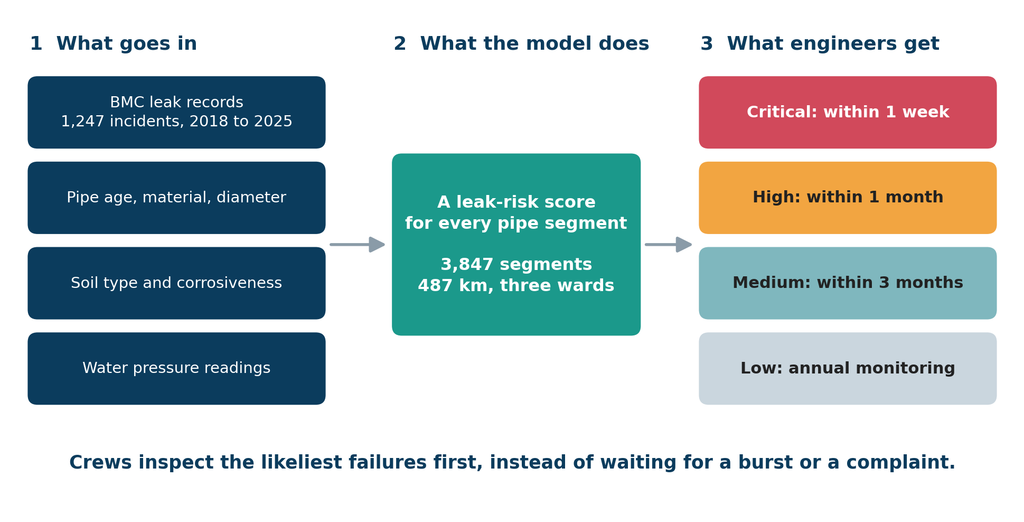
- Records go in. BMC’s leak history (1,247 incidents, 2018 to 2025), plus pipe age, material, soil conditions and water pressure.
- Every pipe gets a score. The model estimates how likely each pipe segment is to leak. It currently covers 3,847 segments across 487 km in three wards.
- Engineers get a ranked map. Pipes fall into BMC’s four priority tiers, each with a response time. No new sensors are needed, only data BMC already holds.
results
BMC inspected 100 pipe segments on site. Of the 50 we ranked highest, 28 had confirmed leaks and 11 more showed signs of stress. Of the 20 we ranked lowest, one had a confirmed leak.
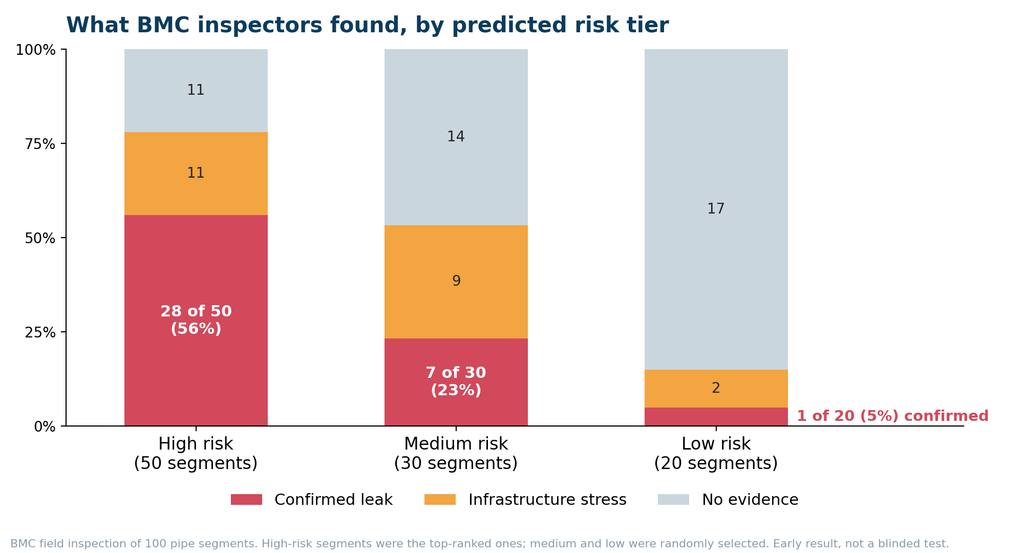
This is an early result. Some confirmed leaks come from BMC’s own records, which also feed the model, and the inspectors weren’t blind to each pipe’s risk tier. We’re now adding a blinded, random field check and re-testing the model on pipes and neighbourhoods it has never seen.
next steps
- Scope: the pilot covers three wards, about a tenth of Mumbai’s network, so city-wide results aren’t established.
- Water saved: we’ve shown where leaks are likely, not yet how many litres fixing them recovers.
- Next: a strict time-split re-test, a blinded field check with BMC, a pilot with BMC crews, and measuring litres recovered per repair.
P.S. Water wAIS is my research project. The Bulleteen is the student STEM publication I founded. My team and I decided that it was okay to give a page to this as opposed to making a whole new website.